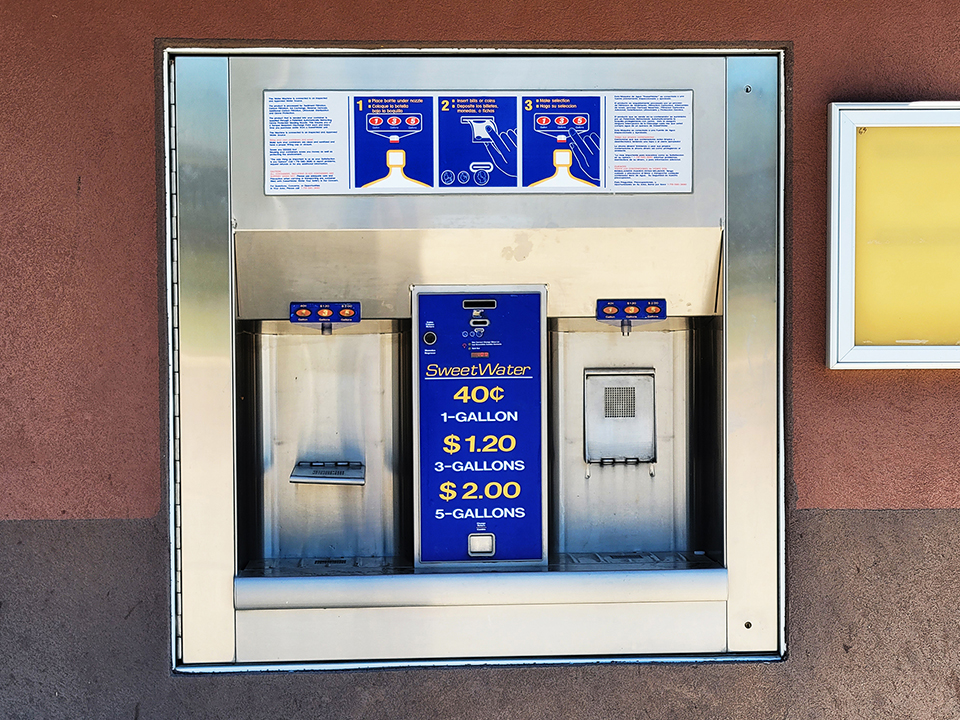
Reverse osmosis is a water purification process that removes impurities and contaminants through the use of a semipermeable membrane. It is considered one of the most effective methods for desalination and producing clean drinking water.
The process involves applying pressure to the contaminated water, forcing it through the semipermeable membrane. This membrane acts as a barrier, allowing only water molecules to pass through, while blocking larger particles, ions, and impurities such as salt, chemicals, bacteria, and viruses.
The pressure applied during reverse osmosis helps overcome the osmotic pressure, which is the natural flow of water from a region of lower solute concentration to a region of higher solute concentration. By reversing this process, water molecules can be separated from the impurities, leaving behind clean, purified water.
Reverse osmosis systems typically consist of several components, including a sediment filter to remove larger particles, a carbon filter to remove chlorine and other chemicals that may damage the membrane, a semipermeable membrane that performs the separation process, and a storage tank for holding the purified water.
The resulting purified water from reverse osmosis is typically free from most contaminants, including dissolved solids, chemicals, heavy metals, and microorganisms. However, it’s worth noting that reverse osmosis can remove essential minerals from water as well, which may need to be added back through other means if desired.
Overall, reverse osmosis is widely used in residential, commercial, and industrial applications to provide clean, safe, and high-quality drinking water or to treat seawater for various purposes.